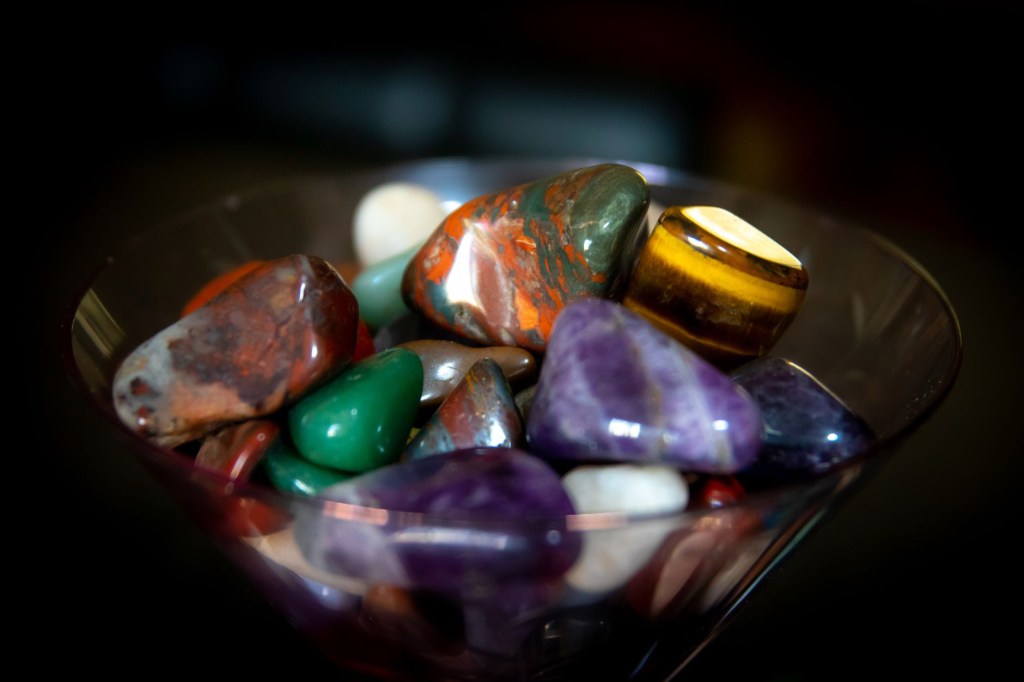
Healing Crystals: Types, Meanings, Benefits, Placement & How to Care for Them
Crystals have fascinated people for centuries. Their colours, patterns, sparkle and natural formations make them beautiful objects, while many spiritual traditions associate particular crystals with qualities such as peace, protection, abundance, confidence and emotional balance.
Today, crystals are commonly used in meditation, mindfulness, home décor, jewellery and spiritual practices. Many people believe that crystals can support their intentions and create a calming atmosphere around them.
It is important to understand that these healing properties are based mainly on spiritual and traditional beliefs rather than scientific evidence. Crystals should therefore be viewed as complementary tools for reflection, meditation and personal rituals—not as replacements for medical treatment.
What Are Healing Crystals?
Healing crystals are naturally occurring minerals or stones that people use for spiritual or emotional purposes. Different crystals are traditionally associated with different intentions.
For example:
- Amethyst is commonly associated with peace and relaxation.
- Rose quartz is associated with love and compassion.
- Citrine is traditionally linked with prosperity and confidence.
- Clear quartz is often called a “master healer.”
- Black tourmaline is associated with protection and grounding.
- Green aventurine is traditionally connected with luck and abundance.
The idea is not necessarily that a crystal “cures” a particular problem. Instead, many people use it as a physical reminder of an intention they want to cultivate.
1. Amethyst — Peace, Calm & Spirituality
Amethyst is one of the most popular crystals because of its beautiful purple colour.
Traditional associations
- Peace and relaxation
- Meditation
- Spiritual awareness
- Emotional balance
- Protection from negative energy
Many people keep amethyst in their bedroom or meditation area because of its association with calmness.
Where to place it
- Bedroom
- Meditation space
- Study or reading area
- Personal altar or spiritual space
An amethyst tower can also be used as a decorative focal point in a room.
2. Clear Quartz — Clarity & Energy
Clear quartz is transparent or translucent and is one of the most recognisable crystals.
It is traditionally considered an amplifying crystal.
Traditional associations
- Mental clarity
- Focus
- Positive intentions
- Meditation
- Energy amplification
Because it is often associated with clarity, some people keep clear quartz on their desk while working or studying.
Where to place it
- Study table
- Work desk
- Meditation area
- Living room
A small clear-quartz tumble stone is particularly easy to keep beside a laptop, notebook or journal.
3. Rose Quartz — Love & Compassion
Rose quartz has a soft pink colour and is traditionally associated with the heart.
Traditional associations
- Love
- Compassion
- Self-love
- Emotional comfort
- Harmony in relationships
It is often chosen by people who want to create a softer and more peaceful atmosphere.
Where to place it
- Bedroom
- Dressing table
- Meditation area
- Relationship or personal space
Rose quartz is also popular in jewellery.
4. Citrine — Abundance, Confidence & Positivity
Citrine is a yellow-to-golden coloured quartz.
It has traditionally been associated with prosperity, optimism and personal confidence.
Traditional associations
- Abundance
- Prosperity
- Motivation
- Confidence
- Positive energy
Because of these associations, citrine is especially popular among people who like to keep symbolic objects related to financial goals and success.
Where to place it
- Work desk
- Office
- Living room
- Wealth-related area of the home
A small citrine tumble stone can easily be kept on a desk or decorative tray.
5. Green Aventurine — Luck & Growth
Green aventurine is a beautiful green stone often associated with opportunity and growth.
Traditional associations
- Luck
- Prosperity
- Growth
- Confidence
- New opportunities
It is sometimes called a “stone of opportunity” in crystal traditions.
Where to place it
- Work desk
- Office
- Living room
- Personal meditation space
It can be particularly meaningful when starting a new project or setting new goals.
6. Tiger’s Eye — Courage & Confidence
Tiger’s eye has distinctive golden-brown bands that create a beautiful chatoyant effect.
Traditional associations
- Courage
- Confidence
- Grounding
- Focus
- Personal strength
People often choose tiger’s eye when they want a symbolic reminder to remain confident and focused.
Where to place it
- Work desk
- Study
- Living room
- Jewellery
It is also commonly worn as a bracelet.
7. Black Tourmaline — Protection & Grounding
Black tourmaline is traditionally considered one of the most popular protective stones.
Traditional associations
- Protection
- Grounding
- Emotional stability
- Blocking negative energy
Some people keep it near entrances or workspaces as a symbolic protective stone.
Where to place it
- Near the entrance
- Work desk
- Living room
- Personal space
8. Selenite — Cleansing & Peace
Selenite is usually white and has a delicate, luminous appearance.
Traditional associations
- Purification
- Peace
- Spiritual clarity
- Cleansing
It is particularly popular among people who practise meditation or other spiritual rituals.
Where to place it
- Meditation room
- Bedroom
- Spiritual space
- Near other crystals
9. Labradorite — Transformation & Intuition
Labradorite is famous for its flashes of blue, green and gold.
Traditional associations
- Transformation
- Intuition
- Self-discovery
- Protection
- Personal growth
It is often chosen during periods of change or when someone wants to focus on self-reflection.
10. Carnelian — Motivation & Creativity
Carnelian ranges from orange to reddish-brown.
Traditional associations
- Motivation
- Creativity
- Confidence
- Passion
- Courage
Artists, entrepreneurs and people beginning creative projects sometimes choose carnelian as a symbolic reminder of energy and determination.
11. Lapis Lazuli — Wisdom & Communication
Lapis lazuli is a deep blue stone, often containing golden-looking pyrite inclusions.
Traditional associations
- Wisdom
- Communication
- Self-expression
- Intuition
- Inner knowledge
It has been valued as a decorative and cultural stone for thousands of years.
12. Smoky Quartz — Grounding & Stability
Smoky quartz ranges from light brown to deep smoky grey.
Traditional associations
- Grounding
- Stability
- Letting go
- Emotional balance
- Protection
It can be used as a decorative stone in areas where you want a grounded, peaceful atmosphere.
13. Black Obsidian — Reflection & Protection
Obsidian is volcanic glass and can have a smooth, glossy black appearance.
Traditional associations
- Protection
- Grounding
- Self-reflection
- Letting go of negativity
Because it is a natural volcanic glass rather than a crystal in the strict mineralogical sense, it is often described simply as a healing stone.
14. Moonstone — Intuition & Feminine Energy
Moonstone has a beautiful shimmering appearance known as adularescence.
Traditional associations
- Intuition
- Emotional balance
- New beginnings
- Inner reflection
- Feminine energy
It is especially popular in jewellery.
15. Fluorite — Focus & Organisation
Fluorite can occur in green, purple, blue and other colours.
Traditional associations
- Focus
- Organisation
- Mental clarity
- Learning
- Decision-making
It is often placed on study tables and work desks.
Crystal Placement Around the Home
You don’t need to fill your entire home with crystals. A few meaningful pieces are enough.
Bedroom
Traditionally associated with calming stones such as:
- Amethyst
- Rose quartz
- Moonstone
Study or Work Area
Consider:
- Clear quartz
- Fluorite
- Citrine
- Green aventurine
Living Room
Suitable decorative choices can include:
- Amethyst
- Clear quartz
- Citrine
- Green aventurine
- Labradorite
Entrance
People who follow crystal traditions often choose:
- Black tourmaline
- Black obsidian
- Smoky quartz
The most important consideration is that the stone should be placed somewhere safe and where you genuinely enjoy seeing it.
Can Crystals Really Heal?
This is where spirituality and science need to be separated.
There is currently no good scientific evidence that crystals can cure diseases, repair organs, balance hormones, remove toxins or directly change a person’s health through an energetic field.
However, a crystal ritual can still have personal value.
For example, holding a crystal while taking five quiet minutes to breathe, meditate or set an intention may help someone feel calmer. The benefit may come from the relaxation ritual, attention, expectation and mindfulness rather than from a scientifically demonstrated healing property of the stone itself.
Therefore, crystals can be incorporated into a wellness routine, but they should not replace appropriate medical care, medication or professional advice.
How to Clean Your Crystals
Crystal traditions use several different cleansing methods.
1. Physical cleaning
For many stones, gently wiping them with a soft, dry cloth is sufficient.
2. Moonlight
Some people place crystals near a window overnight as a symbolic cleansing ritual.
3. Sound
A singing bowl, bell or gentle music can be used as part of a meditation ritual.
4. Intention
Some crystal practitioners simply hold the crystal and mentally set a fresh intention for how they want to use it.
Important:
Not every crystal should be put in water or direct sunlight. Some minerals can be damaged by water, heat or prolonged sunlight.
When in doubt, use a dry cloth, moonlight or sound rather than experimenting with water or strong sunlight.
How to Recharge Crystals
“Recharging” is a spiritual practice rather than a scientifically established process.
Common methods include:
- Moonlight
- Meditation
- Sound
- Placing the crystal in a peaceful space
- Holding it while setting an intention
The ritual can be meaningful even if you view the crystal symbolically rather than believing that it literally stores energy.
Wearing Crystals as Jewellery
Crystals are commonly worn as:
- Bracelets
- Necklaces
- Rings
- Pendants
- Earrings
The traditional meaning depends on the particular stone.
For example:
Amethyst: peace and spiritual awareness
Rose quartz: love and compassion
Tiger’s eye: courage and confidence
Citrine: abundance and positivity
Black tourmaline: protection and grounding
There is no scientifically established rule that a particular crystal must be worn on a particular hand or on a particular day. Those practices come from different spiritual and astrological traditions.
A Simple Crystal Routine
You don’t need complicated rituals.
Try this simple routine:
- Choose one crystal that represents your current intention.
- Hold it for a few moments.
- Take five slow breaths.
- Think about what you want to cultivate.
- Keep the crystal somewhere visible.
- Repeat the ritual whenever you need a moment of mindfulness.
For example:
Clear quartz → “I want clarity.”
Amethyst → “I want peace.”
Citrine → “I want to stay positive and focused on my goals.”
Green aventurine → “I am open to growth and opportunity.”
Rose quartz → “I will treat myself and others with compassion.”
Final Thoughts
The beauty of crystals is not only in their colours and natural formations. For many people, they become reminders of the qualities they want to bring into everyday life.
Whether you view crystals spiritually, symbolically, aesthetically or simply as beautiful pieces of nature, they can become part of a calming personal ritual.
The key is to enjoy them safely and realistically: let crystals complement your wellbeing practices, rather than expecting them to replace evidence-based healthcare.
Sometimes the most powerful part of a crystal isn’t the stone itself—it is the intention you attach to it.
I wear crystals as jewellery and they are also a part of my home. Try them and let me know which crystal you buy for home or as a jewellery.
Stay happy, stay healthy, stay safe , stay connected.
Ramneet Kaur

